

Become a more effective climate and sustainability communicator in eight weeks.
Communicate climate with clarity, credibility, and confidence.
USC’s distinction is applied practice. Participants don’t just learn the principles of effective climate communication, they practice putting them to work in real-world situations. Drawing on Annenberg’s strengths in journalism, storytelling, media, and communication, participants learn, create, test, receive feedback, revise, and practice responding in real time.
Program Dates
Application Deadline
January 8, 2027
Program Orientation
January 13, 2027
Program Dates
January 19–March 11, 2027
Certificate Success Stories
“I have been studying sustainability in various forms for many years, especially at Harvard and Cornell. There I learned about a wide array of subjects from Medicinal Plants to Sustainable Landscape Design, Soil Health, Organic Agriculture and Sustainable Ocean Environments. I realized that after all of that intense work, the most useful and practical program I have ever taken is the Certificate in Sustainability Communications at USC Annenberg. It literally changed my life.”
– Leslie C., Summer 2025 cohort
The first-of-its-kind program for climate storytelling
Climate communication has never been more important—or more challenging. Complex science, rapidly evolving solutions, misinformation, and politicization can make even experienced professionals uncertain about what to say and how to say it. USC Annenberg’s Certificate in Sustainability Communication gives you the knowledge, strategy, and hands-on practice to communicate climate issues clearly, credibly, and confidently—including when the conversation gets difficult.
Participants in our selective program benefit from carefully curated small cohorts and uncommon access to field-leading experts. They will learn how to convey sustainability messaging with accuracy and balance, avoiding both greenwashing and misinformation/disinformation, and will showcase these skills through a final project.
What You’ll Learn to Do

- Translate complex climate information clearly and accurately for non-specialist audiences.
- Develop evidence-informed communication strategies for specific audiences and objectives.
- Choose and create stories, visuals, data, and digital content suited to the audience and medium.
- Recognize and respond to misinformation, misleading sustainability claims, and AI-generated content while maintaining credibility and trust.
- Communicate in real time—including when questions are unexpected, issues are complex, or claims are challenged.
Who Will Benefit
What You’ll Leave With
This program is designed for professionals who communicate, or want to communicate, climate and sustainability information to non-specialist audiences. Some examples of people who may benefit from this program may include:
-
Scientists and researchers
- Journalists, media professionals, and digital creators
- Communications, public relations, and public affairs professionals
- Sustainability, ESG, and corporate responsibility professionals
- Government and public-sector professionals
- Nonprofit, philanthropy, and environmental organization leaders
- Entrepreneurs, investors, and innovators
- Educators
- Recent graduates and early-career professionals interested in climate communication
Climate communication isn’t a single career. The skills taught in the program are increasingly relevant across journalism and media, science and research, sustainability, corporate communications, government, nonprofits, public affairs, education, and digital media.
Participants leave with a portfolio-ready communication project, connections to practitioners and peers, and eligibility to join the USC Climate Communicators Corps for continued professional development and networking.
- A USC Annenberg Certificate in Sustainability Communication
- A finished, portfolio-ready climate communication project
- A practical framework for developing evidence-informed climate communication
- Experience testing, refining, and presenting your communication
- A network of fellow climate communicators and leading practitioners
- Eligibility to join the USC Climate Communicators Corps
- A verified digital credential
Additional benefits
- Access to USC Libraries, which includes millions of academic resources on the internet
- Small cohorts and intentional community-building
- All sessions are delivered live – interact with premier experts in the field, in real time
- One-on-one access to instructors through on-demand office hours
-
Participants who successfully complete the program will earn an official Certificate in Sustainability Communication along with a verified digital badge issued through Credly, which can be shared on LinkedIn, digital resumes, and other professional platforms to showcase their expertise in sustainability communication.
-
Certificate graduates are eligible to join the USC Climate Communicators Corps, a free network designed to support continued learning, connection, and professional growth.
Members receive access to quarterly online programming with leading experts, opportunities to workshop communication projects and connect with peers, career and professional-development resources, and an annual in-person gathering at USC. Annual in-person programming may include hands-on media and on-camera training using USC Annenberg’s professional media facilities, networking, and opportunities to experience climate research and communication in action.
Schedule

Session 3:
- January 19–March 11, 2027
Synchronous component: (online sessions)
- Live Learning Session: Tuesdays from 5:30-7pm PT/ 8:30-10pm ET
- Applied Lab: Thursdays from 5-7pm PT/8-10pm ET
Asynchronous components: (4-6 hours per week)
- Selected readings
- Applied exercises and capstone development
- Office hours and instructor support
Curriculum

Week 1 – Climate Without the Jargon
Week 2 – Climate Communication & Audience Psychology
Week 3 – Telling Climate Stories
Week 4 – Data, Visual, & Digital Climate Storytelling
Week 5 – Speaking About Climate
Week 6 – Trust in a Contested Information Environment
Week 7 – Communicating Solutions and Tradeoffs
Week 8 – Final Project Showcase
Capstone Project
Throughout the eight week program, participants develop a climate communication project for a real audience and purpose.
Participants apply course concepts as they develop their audience strategy, message, format, evidence, and approach; test and refine their communication; and consider how to evaluate its effectiveness.
Participants leave with a concise communication strategy + a finished communication product + experience presenting and responding to questions about their work.
Why USC Annenberg?
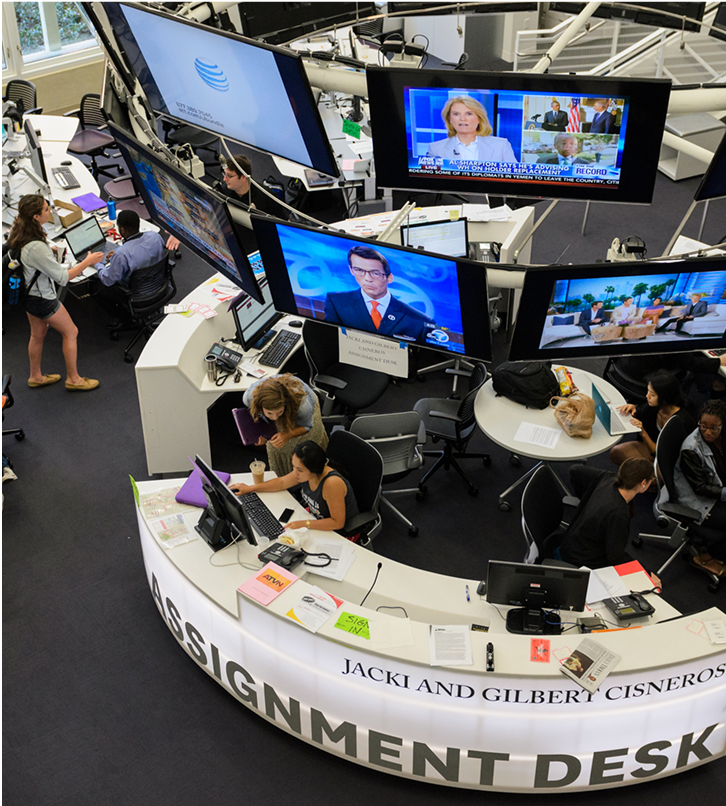
At USC Annenberg, climate communication is something practiced, not just studied. Drawing on the school’s strengths in journalism, storytelling, media and communication, participants develop, test and deliver climate communication for real-world audiences and situations.
Participants learn from leading climate scientists, communication researchers, journalists, storytellers, creators and practitioners, gaining insights and skills they can apply to their own climate communication.
The USC Center for Climate Journalism and Communication combines USC’s academic scholarship, research and professional training expertise to strengthen climate communication. The Center has trained more than 100 journalists across 50+ markets, 70 experts ranging from architects to scientists, and hundreds of USC students.
FAQs

Q: Who is eligible for the program?
A: This program is intended for professionals with at least a high school GED who are proficient in English and are actively engaged in learning about climate communication.
The ideal participant is someone with a few years of professional experience and is looking to bolster their knowledge about climate and sustainability communication through this program. However, if you don’t meet the criteria and would still like to be a part of the inaugural cohort of the program, please reach out to us at redhot@usc.edu.
Q: How much does the application cost?
A: The application is free for all. A complete application requires links to 1-2 writing samples as well as a short statement of purpose to demonstrate your interest in the program.
Upon submitting the application, you can expect to receive confirmation about your enrollment within a week. To confirm your enrollment, you must submit a $500 non-refundable enrollment fee that will be included within the program fee.
Q: What are the requirements to successfully complete the course?
A: Participants must attend at least 7 out of the 8 synchronous lecture sessions to successfully complete their attendance requirements for the course. Participants must successfully complete the final project requirements for the course to receive the certificate.
Q: What materials and resources will I have access to after completing the course?
A: The instructors will provide a PDF workbook covering all the materials in the course, as well as links and resources shared with participants throughout the course. Participants will have access to all the materials shared during the course until 60 days after the last day of the program.
Q: How do I enroll in this course?
A: Please fill out our application form here and one of our team members will reach out with more details.
Q: Do you offer any scholarships or financial aid for the program?
A: Scholarships and financial aid are not guaranteed and are only offered when funding is available. Most cohorts are self-funded by participants. If you would like to inquire about any available scholarship or financial aid opportunities, please email redhot@usc.edu.
Q: Can I use this certificate as credit toward a degree?
A: This non-credit certificate may not be used toward progress for any USC degree and will not appear on any transcript or grade report.
Q: Can my employer pay for my training program?
A: Yes! We offer special packages for group signups. Please contact us at redhot@usc.edu if you are an organization interested in signing up for group training.
Q: Is this training program tax-deductible?
A: As the university is under the nonprofit designation, any donations are considered tax-deductible. Employers can benefit from tax credits if they pay for their employee’s continuing education through this training program.
For individuals paying their own tuition, there are several governmental tax credit programs including the American Opportunity Credit as well as Student Loan Interest Deduction Credits that many taxpayers qualify for. Find out more about those here.
Q: Can I get a refund if I decide to drop out? What is the refund period?
A: You may request a withdrawal with a refund up until 48 hours after the start of your program, minus the $500 nonrefundable enrollment fee.
If you wish to defer your enrollment to a future session, you may be able to do so by requesting a deferral with a refund up to 48 hours after the start of your program. If you cannot finish the program requirements and wish to defer completion to a future term, you can do so but will not be eligible to receive a refund.
How to apply
Fill out our enrollment form here, and a team member will reach out with more details on how to sign up.
You can also email our team directly at redhot@usc.edu for more information about the program and how to enroll.
Process:
- Fill out our application form
- A team member from the Center will reach out to you with a decision on your application
- Submit the non-refundable enrollment fee to confirm your participation in the program
Requirements:
- High school/college diploma
- CV/Resume
- Short statement of purpose (500 words)
- 1-2 writing samples
- If international, proof of English language proficiency
Program fee: $2,500
This includes a $500 non-refundable enrollment fee.